


Our Approach
Humanitarian programming responds to harm after it happens. We build the conditions that prevent it.
Movement is not a supplement to humanitarian response. It is community infrastructure.
The Problem
The dominant model of GBV prevention and protection programming is well-organised for responding to harm. Case management systems, safe spaces, referral pathways, and service facilities are necessary, and the organisations that run them do critical work.
But they share a structural limitation. They reach people after harm has occurred, in fixed locations, through trained professionals. They were not designed to address the community-level conditions that produce harm in the first place.
That gap — between reactive service infrastructure and genuine community-level prevention — is where Movement in Refuge works.
Our Rationale
Sport and movement are not recreational additions to a protection model. They operate through repeated embodied experience — the physical routine of showing up, the trust built through a sustained coaching relationship, the peer solidarity formed between people who train together over months. These are processes that no workshop, awareness session, or referral pathway can replicate.
Embodied Change
Physical activity builds agency, nervous system regulation, and the sense of capability that is itself a protective factor. Confidence is an experience you build, rather than a message you deliver through awareness raising.
Community reach
Coaches work in the spaces where people already live and occupy — reaching those who will never access a fixed facility. The programme goes to the community, not the other way around.
Sustained relationship
A coach who has worked with a group for six months has an influence that no one-off intervention approaches. Change at community level is built through repeated contact, genuine relationship, and time.
Our Model
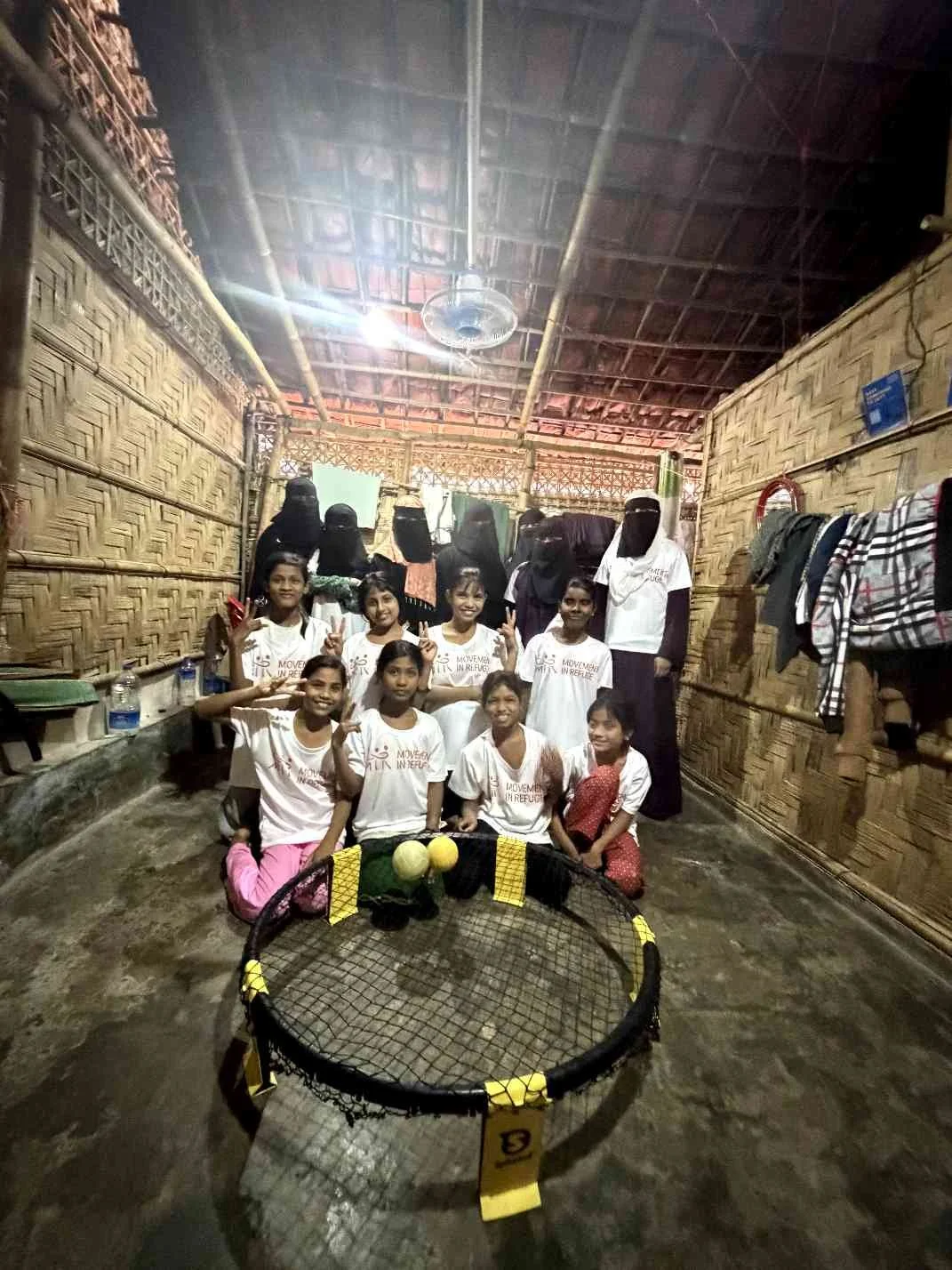
The defining feature of MiR's delivery model is that it goes to people — to the shelters, open spaces, and community structures where displaced and marginalised communities actually live. This is not a resource constraint. It is a deliberate response to a consistent research finding: the people who most need protection are often the least able to reach a facility.
A dedicated programme centre provides what community spaces cannot — privacy, equipment, year-round shelter, and space for more expansive physical activity. It pulls motivated participants in. Community-based coaching does the opposite: it pushes programming out to those who cannot or will not come. These two modalities are not alternatives. They are a progression, and both are required.
When a community coach delivers a session in a neighbourhood space, she is doing something a facility-based service cannot: she is changing the norms of the community, not just the experiences of the individuals she reaches.
Who we work with
Women and Girls
Structured physical activity in enclosed, female-only spaces builds physical literacy, peer solidarity, and the embodied confidence that reduces vulnerability. Alongside movement, MiR integrates chess, literacy, and language coaching — and empowerment self-defence, which moves participants from awareness of their rights to the skills to act on them.
People with disabilities
People living with disabilities face compounded vulnerability in displacement and are too often excluded from both physical activity and protection programming. Chess, yoga, meditation, and conscious movement offer accessible pathways to development and community connection. MiR's inclusive programming is developed in direct partnership with Sports for Hope and Independence (SHI).
Men and Boys
Displacement removes the legitimate pathways through which men and boys build meaning, belonging, and identity. The result — idleness, disconnection, proximity to harm — is not a separate problem from GBV. It is the same system from a different angle. Structured sport, sustained mentorship, and the coaching relationship over time create the conditions for genuine norm change. You cannot address gender-based violence by working only with its victims.
Safeguarding
MiR draws on global best-practice frameworks from both the humanitarian protection sector and international sports safeguarding standards. Every element of programme design is a safeguarding decision: female coaches for all girls' and women's sessions; enclosed spaces with separate sanitation; protected transport arrangements; reporting pathways that do not depend on the participant's own coach; and a zero-tolerance, survivor-centred policy reviewed at board level.
We are dedicated to safeguarding as a structural precondition for the social licence to operate within a community’s own normative framework, rather than a compliance requirement appended to a programme desing.
The Evidence We’re Building
The evidence base for sport-based GBV prevention and psychosocial support is growing — but it is not yet sufficient to place this approach firmly within mainstream humanitarian response. The research that does exist points consistently toward sport's role in building resilience, protective factors, and social cohesion in displacement contexts. The research that is missing — rigorous, displacement-specific, documenting mechanisms not just outputs — is what MiR is committed to generating.
Our applied research programme, From Movement to Meaning, is being developed in partnership with the University of Edinburgh and Leeds Beckett University's iCoachKids programme. It is designed to document not just what our model produces, but how — the mechanisms by which trauma-informed coaching changes protection outcomes, psychosocial wellbeing, and community norms over time.
“The sector does not lack commitment to women and girls. It lacks evidence that sport and movement, at community scale, changes protection outcomes. We intend to build that evidence.”